

Unifying Educational Systems - Leadership for Special Education
Unifying Educational Systems - Leadership for Special Education
Price subject to change. Tap below for current.
Couldn't load pickup availability
In this review of Unifying Educational Systems the focus is squarely on leaders and policymakers who want to rethink how special education is organized and delivered. The book is best for district administrators, school leaders, and teacher-educators seeking a research-grounded discussion of policy, purpose, and practice; its single biggest reason to buy is the sustained, critical examination of traditional leadership rituals and the proposal of a more integrated, systems-focused approach to serving students with special needs. This reviewer found the volume particularly useful as a conversation starter for re-conceptualizing leadership within current public policy constraints.
Key Features
- Policy-grounded analysis: Chapters connect current federal and state debates to classroom and leadership decisions so readers can see how policy shapes practice.
- Research-informed discussion: Contributors draw on teaching and learning research to question established definitions and suggest alternatives to the continuum of services.
- Leadership focus: The book challenges traditional leadership rituals and offers new ways for administrators to conceptualize special education roles.
- Practical perspectives: Authors discuss feasibility and implementation challenges, helping leaders anticipate obstacles in real districts.
- Future-oriented chapters: Contributors identify paradoxes and propose directions for future policy and practice, supporting long-term planning.
Who It's For
Unifying Educational Systems is aimed at school district leaders, special education supervisors, teacher-preparation faculty, and policy analysts who need a thoughtful critique of how special education leadership is commonly practiced and a foundation for redesigning systems. Readers who appreciate evidence-linked argumentation and policy context will find the essays directly relevant to district planning and professional development.
Those seeking step-by-step implementation manuals, classroom-level interventions, or a quick reference guide to instructional strategies should look elsewhere; this volume is conceptual and systemic rather than a how-to guide for individual teachers.
Pros & Cons
Pros
- Offers a clear, research-based critique of existing special education leadership practices that provokes rethinking at the district level.
- Bridges policy debates and classroom implications, making it useful for administrators and policy-minded educators.
- Includes multiple author perspectives, which enrich discussion of feasibility and future challenges.
Cons
- The book is conceptual and policy-oriented, so readers seeking concrete classroom strategies may find it less directly applicable.
Specifications
| Title | Unifying Educational Systems |
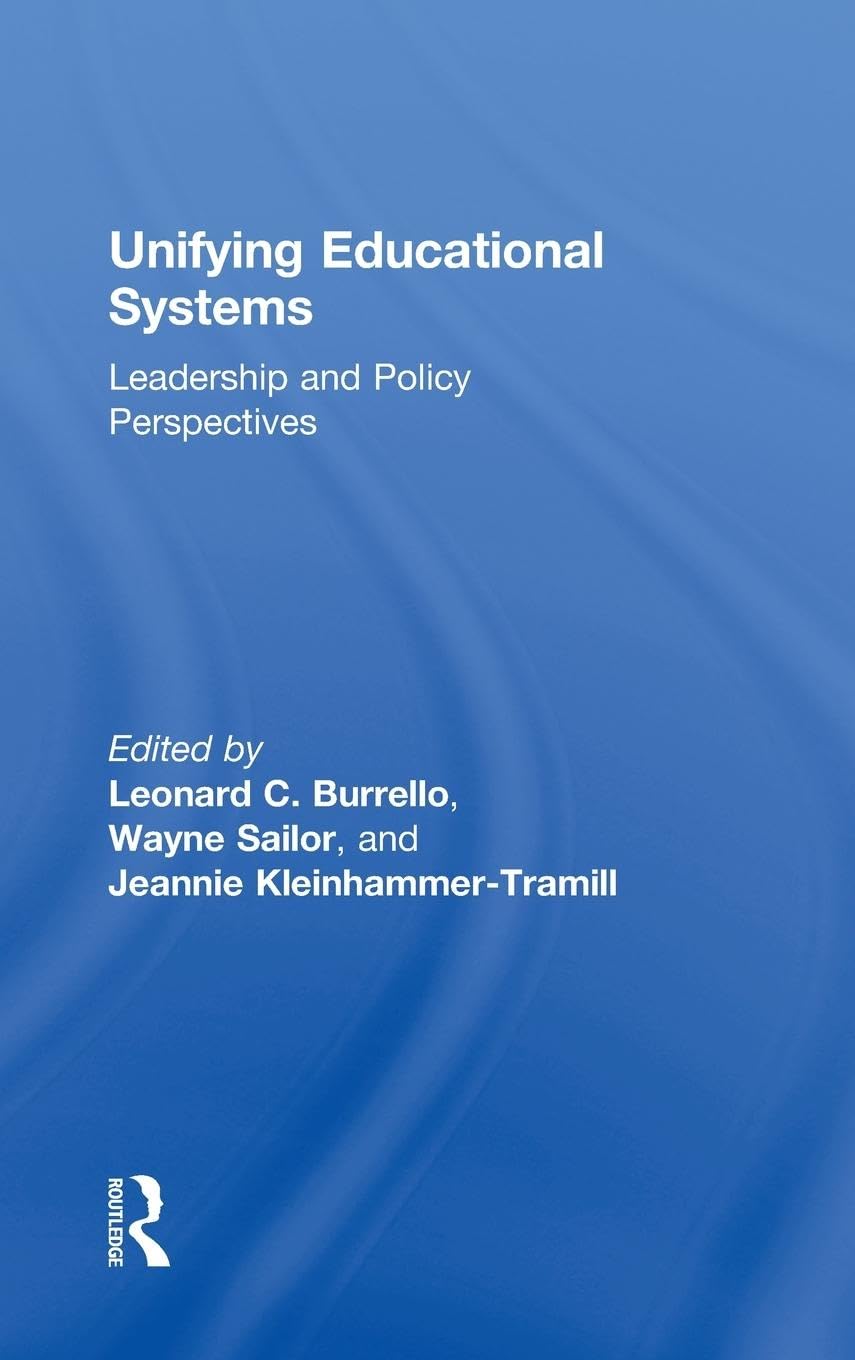
| Authors | Leonard C. Burrello, Wayne Sailor, Jeannie Kleinhammer-Tramill |
| Subject | Special education leadership and policy |
| Approach | Policy analysis and research-informed discussion |
| Intended audience | School leaders, administrators, policy analysts |
| Focus | Re-conceptualizing leadership within current policy contexts |
Our Verdict
Unifying Educational Systems is a valuable resource for educational leaders and policy-focused educators who need a rigorous, research-linked critique of special education leadership. Its systemic perspective and attention to policy feasibility make it a strong purchase for districts and graduate programs planning structural change, though practitioners seeking classroom-level tools should supplement this book with implementation guides.
Frequently Asked Questions
Does this book offer classroom strategies?
No. The volume emphasizes leadership, policy, and systems thinking rather than specific classroom instructional techniques.
Who contributed to the book?
Chapters are authored by leaders and scholars including Leonard C. Burrello, Wayne Sailor, and Jeannie Kleinhammer-Tramill, among others.
Will it help with district-level planning?
Yes. The book examines feasibility and implementation challenges and is useful for district administrators considering structural changes.
Editor's Take
Unifying Educational Systems is a rigorous, policy-focused resource for district leaders and educators seeking to re-conceptualize special education leadership; valuable for planning systemic change though not a classroom how-to guide.

Recently viewed
Recently viewed products will appear here as customers browse the store.