

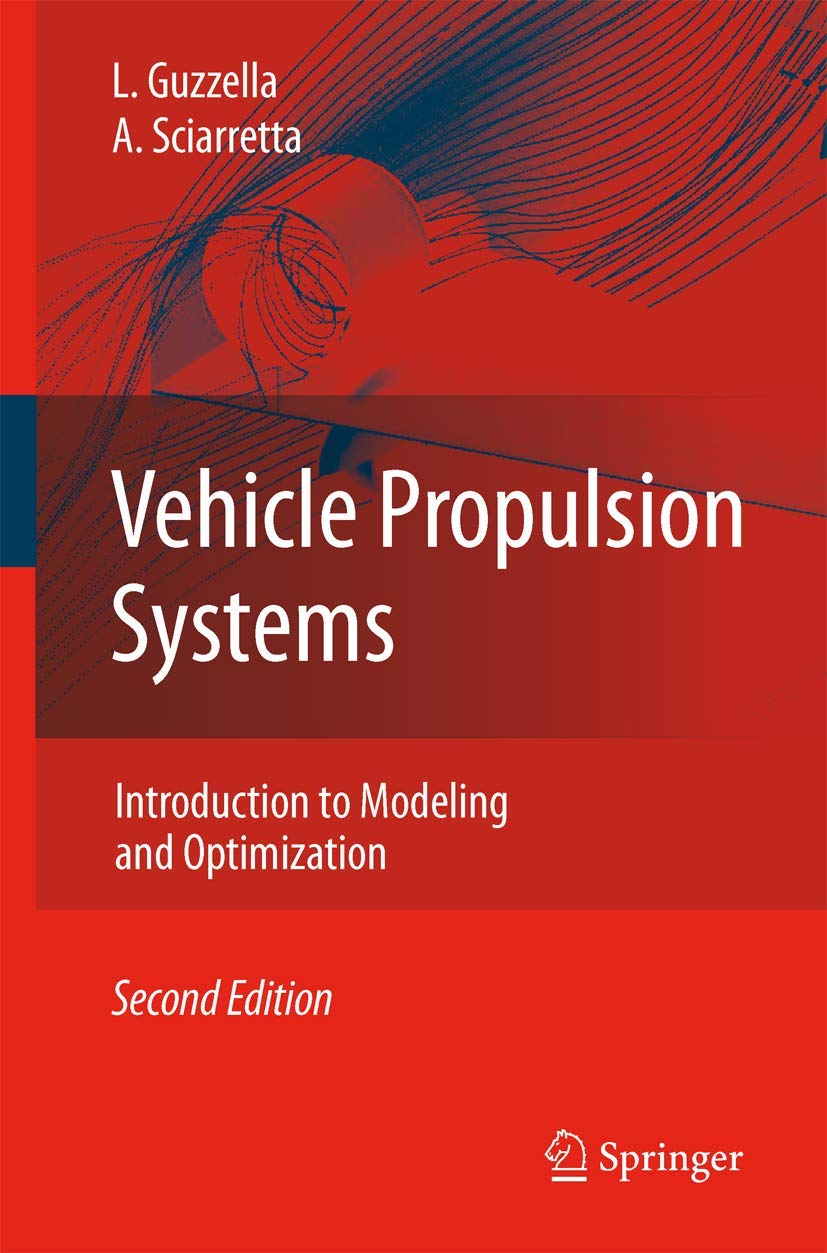
Vehicle Propulsion Systems: Introduction to Modeling and Optimization
Vehicle Propulsion Systems: Introduction to Modeling and Optimization
Price subject to change. Tap below for current.
Couldn't load pickup availability
In this review of Vehicle Propulsion Systems: Introduction to Modeling and Optimization the reviewer finds a focused, technically rigorous introduction to modeling the longitudinal behavior of road vehicles. Geared toward engineers and graduate students, the book's single biggest selling point is its emphasis on control-oriented mathematical descriptions that enable model-based optimization of propulsion systems, particularly for minimizing fuel and energy consumption. The review explains why readers interested in system-level design and the mathematical foundations of propulsion optimization will find the book valuable.
Key Features
- Control-oriented modeling: Presents mathematical descriptions tailored to control and systems analysis so readers can build models usable for controller design and simulation.
- Focus on energy minimization: Emphasizes analysis and minimization of fuel and energy consumption, useful for engineers working on efficiency improvements.
- System-level perspective: Treats propulsion systems as interconnected components, helping readers understand how changes to one part affect overall performance.
- Model-based optimization: Introduces optimization approaches for designing new propulsion systems, which supports informed design tradeoffs.
- Relevance to novel architectures: Discusses approaches applicable when adding components like electric motors or storage devices to conventional drivetrains.
Who It's For
The book is best for graduate students, practicing engineers, and researchers who need a rigorous introduction to mathematical modeling and optimization of vehicle propulsion systems. It suits readers who already have some background in control theory, thermodynamics, or vehicle dynamics and want a control-oriented, system-level treatment of energy-efficient design.
Those seeking a handbook of hands-on repair procedures, step-by-step aftermarket modifications, or elementary classroom material for undergraduates with no prior technical background should look elsewhere. The text assumes comfort with mathematical models rather than focusing on workshop practice or introductory automotive mechanics.
Pros & Cons
Pros
- Clear emphasis on energy and fuel consumption reduction that aligns with contemporary propulsion design goals.
- Strong presentation of model-based optimization methods for system-level design choices.
- Useful discussion of integrating additional components such as electric motors and storage devices for hybrid architectures.
Cons
- Not a practical repair or maintenance manual and therefore not suited to non-technical readers.
Specifications
| Title | Vehicle Propulsion Systems: Introduction to Modeling and Optimization |
| Authors | Lino Guzzella, Antonio Sciarretta |
| Subject focus | Longitudinal vehicle behavior and propulsion system modeling |
| Primary emphasis | Analysis and minimization of fuel and energy consumption |
| Approach | Control-oriented mathematical description and model-based optimization |
| Intended audience | Engineers, researchers, graduate students |
Our Verdict
This book is a well-focused academic resource for those designing and optimizing vehicle propulsion systems; it delivers strong value for engineers and graduate students seeking control-oriented models and optimization methods. It is a worthwhile investment if you need system-level mathematical descriptions to guide efficient propulsion design, but it is not intended as a practical repair or introductory mechanics text.
Frequently Asked Questions
Does this book cover hybrid and electric components?
Yes, it discusses adding components such as electric motors and storage devices and how models must expand to capture their effects on system performance.
Is prior math or control knowledge required?
Yes, readers will benefit from a background in mathematical modeling or control theory to follow the control-oriented descriptions and optimization methods.
Is this a maintenance or repair manual?
No, the text focuses on modeling and optimization rather than hands-on repair procedures.
Editor's Take
A focused, control-oriented resource for engineers and graduate students seeking mathematical models and optimization techniques to minimize fuel and energy consumption in vehicle propulsion systems; not a hands-on repair manual.

Recently viewed
Recently viewed products will appear here as customers browse the store.