

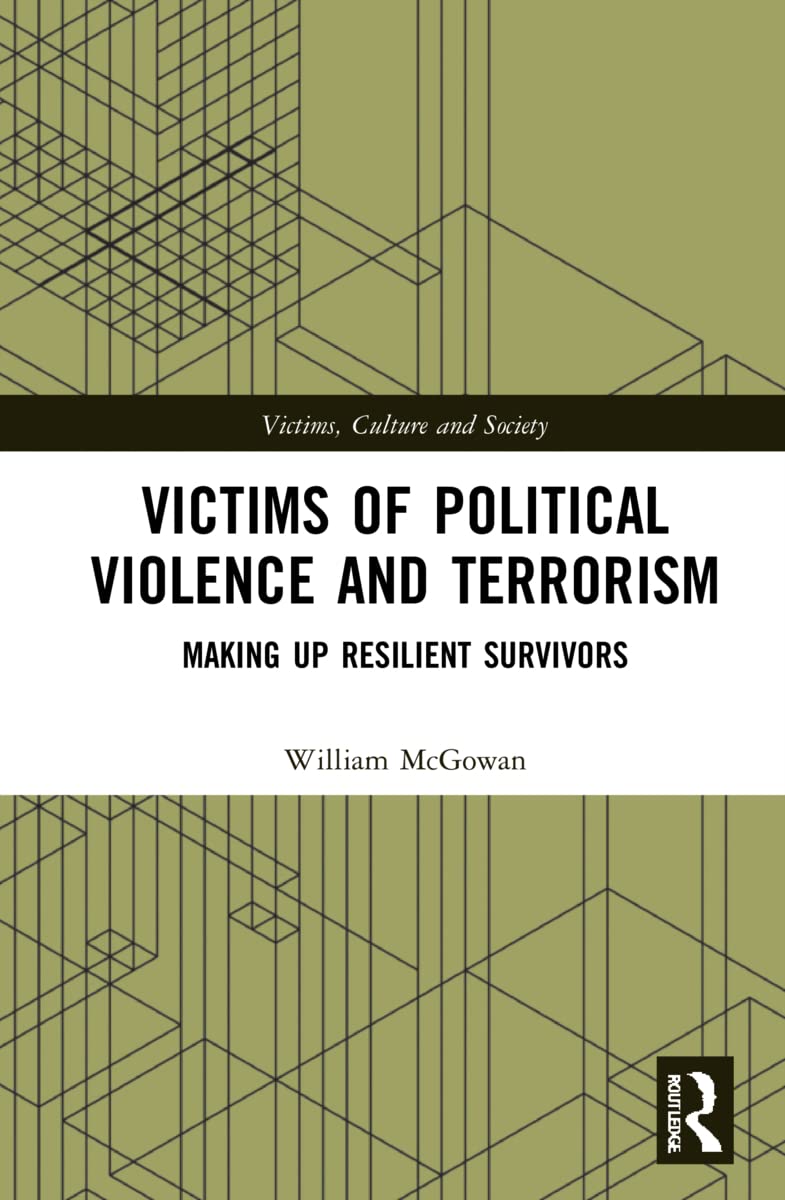
Victims of Political Violence and Terrorism: Making Up Resilient
Victims of Political Violence and Terrorism: Making Up Resilient
Price subject to change. Tap below for current.
Couldn't load pickup availability
In this review of Victims of Political Violence and Terrorism: Making Up Resilient Survivors, the book is recommended for readers seeking a thoughtful, evidence-based exploration of how survivors and institutions understand resilience after rare, high-profile violence. William McGowans work stands out because it combines two years of observational field research with critical analysis across media, policy and survivor testimony, making it valuable for clinicians, policy makers and scholars who want a grounded discussion rather than simple models of recovery.
Key Features
- Field research: Draws on two years of observational work with a British NGO, giving readers direct, empirically informed insight into survivor support in practice.
- Focus on survivors: Examines how survivors themselves respond and are responded to, centering lived experience rather than abstract theory.
- Interdisciplinary sources: Brings together security policy, media analysis and academic literature to challenge simple notions of trauma and resilience.
- Critical perspective: interrogates normative assumptions about recovery and resilience, prompting readers to reconsider standard clinical and policy responses.
- Contextual analysis: Considers responses to both victims and former perpetrators, widening the discussion about aftermaths of political violence.
Who It's For
This book is best suited to academics, clinicians in trauma and disaster response, NGO staff, and policy makers who need a nuanced, research-led perspective on resilience after political violence. Its observational grounding and critical framing make it useful as a companion text in courses on trauma, security policy and forensic social work.
Readers seeking practical self-help guidance or a step-by-step clinical manual should look elsewhere; the book is analytical and interpretive rather than a how-to guide for individual therapy or immediate crisis interventions.
Pros & Cons
Pros
- Well-grounded in empirical observation, offering detailed accounts from two years of fieldwork with a British NGO.
- Provides a broad interdisciplinary view that connects media, policy and survivor perspectives on resilience.
- Centers survivor voices and highlights contested meanings of recovery, useful for reflective practice.
Cons
- The book is analytical and may feel theoretical to readers seeking immediate clinical techniques or practical stepwise guidance.
Specifications
| Title | Victims of Political Violence and Terrorism: Making Up Resilient Survivors |
| Author | William McGowan |
| Research basis | Two years of observational field research with a British NGO |
| Focus | Survivors of political violence and terrorism; responses to victims and former perpetrators |
| Approach | Interdisciplinary analysis including security policy, media and academic literature |
| Subject area | Trauma, resilience, recovery |
Our Verdict
William McGowans book is a thoughtful, evidence-rich examination of resilience that rewards readers who want critical, research-informed perspective rather than quick fixes. It is good value for practitioners, scholars and policy makers who need to understand how normative assumptions shape responses to political violence.
Frequently Asked Questions
Does the book include original research?
Yes, it is based on two years of observational field research with a British NGO working with victims and former perpetrators.
Is this a clinical treatment manual?
No, the book is analytical and interdisciplinary rather than a step-by-step clinical guide for treatment.
Who contributed perspectives besides survivors?
The author draws on security policy documents, media analysis and academic literature as well as survivor testimony.
Editor's Take
A thoughtful, research-informed examination of resilience after political violence that is best for clinicians, scholars and policy makers seeking critical analysis rather than a clinical manual.

Recently viewed
Recently viewed products will appear here as customers browse the store.