

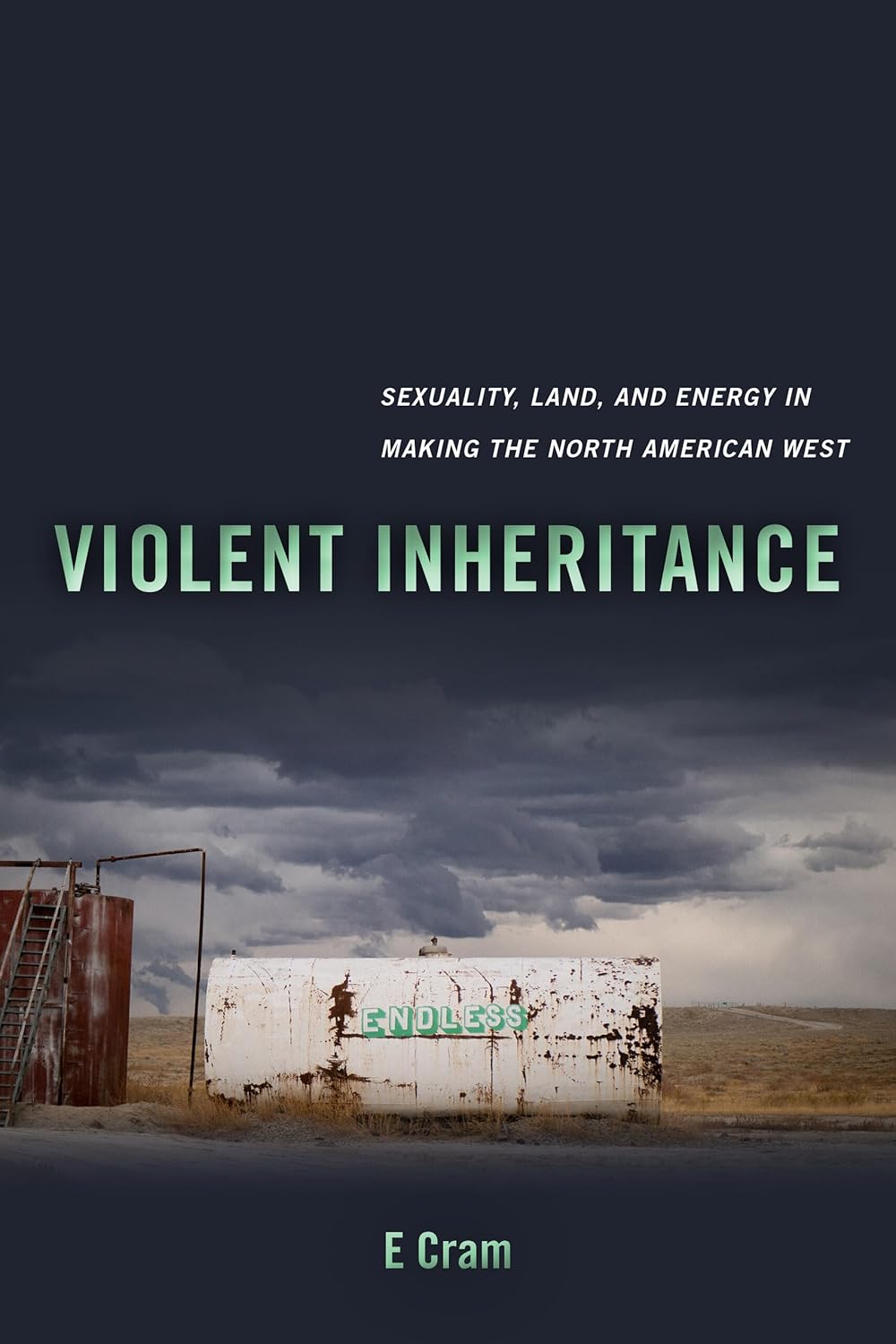
Violent Inheritance: Sexuality, Land, and Energy in Making the North
Violent Inheritance: Sexuality, Land, and Energy in Making the North
Price subject to change. Tap below for current.
Couldn't load pickup availability
In this review of Violent Inheritance, Emerson Cram offers a challenging, research-driven account of how settler colonialism and energy regimes shaped sexual modernity in the North American West. Readers interested in environmental history, queer eco-criticism, and the politics of land will find the book's central claim compelling: sexuality functions as a form of extractivism that draws value from land, bodies, air, and minerals. The strongest reason to read it is Cram's archival and ethnographic reconstruction of the "land lines" linking infrastructure, memory, and violence, which reframes familiar regional controversies in a provocative theoretical register.
Key Features
- Archival and ethnographic method: Cram combines historical archives with field research to trace how communities and publics contest memory cultures around land use.
- Queer eco-criticism frame: The book transposes queer theory onto environmental analysis to show how sexuality operates within extractive systems.
- Focus on energy regimes: Detailed attention to the energy systems that fueled western settlement clarifies the material forces behind social and sexual orders.
- Regional case studies: Close readings of land use controversies at the turn of and into the twentieth century ground theoretical claims in concrete disputes.
- Concept of extractivist sexuality: By defining sexual modernity through extractivism, the book illuminates how bodies and environments are valued and harmed.
Who It's For
Violent Inheritance is best suited to scholars, graduate students, and advanced undergraduates in environmental studies, gender studies, and history who want a tightly argued, theoretically sophisticated account of how sexuality and energy intersect with settler colonial power. Researchers working on memory, infrastructure, and land politics will find Cram's archival work particularly valuable.
Readers looking for a general introduction to western history or a light, narrative-driven popular history should look elsewhere; this book assumes some familiarity with critical theory and debates in queer and environmental scholarship and rewards careful, attentive reading.
Pros & Cons
Pros
- Original conceptual framing links sexuality and extractivism in a way that advances both queer theory and environmental history.
- Strong archival and ethnographic grounding gives weight to theoretical claims and provides readable case studies.
- Clear emphasis on energy regimes makes the material stakes of settler colonialism concrete and traceable.
Cons
- Theoretical density may be demanding for readers without background in critical theory or queer studies.
Specifications
| Title | Violent Inheritance: Sexuality, Land, and Energy in Making the North American West |
| Series | Environmental Communication, Power, and Culture (Volume 3) |
| Author | Emerson Cram |
| Primary topics | Sexuality, settler colonialism, land use, energy regimes |
| Method | Archival and ethnographic research |
| Approach | Queer eco-criticism and historical analysis |
Our Verdict
Violent Inheritance delivers a rigorous, conceptually bold account of how sexuality and energy shaped the North American West, making it essential for specialists in environmental and gender studies. Its archival depth and theoretical clarity offer strong value to researchers willing to engage with demanding but rewarding arguments.
Frequently Asked Questions
Does this book use primary sources?
Yes. Cram relies on archival documents alongside ethnographic fieldwork to support the book's claims.
Is this accessible to general readers?
The book is theory-forward and may be challenging for general readers without background in queer theory or environmental scholarship.
What central claim does the book make?
The central claim reframes sexual modernity as a form of extractivism that extracts value from land, air, minerals, and bodies within settler colonial contexts.
Editor's Take
Violent Inheritance is a rigorous, conceptually bold study that links sexuality and extractivism to settler colonial energy regimes; it is essential for scholars in environmental and gender studies willing to engage dense theoretical work.

Recently viewed
Recently viewed products will appear here as customers browse the store.