

Watching TV Is Not Required: Thinking About Media and Thinking About
Watching TV Is Not Required: Thinking About Media and Thinking About
Price subject to change. Tap below for current.
Couldn't load pickup availability
In this review of Watching TV Is Not Required, the book is recommended for instructors and undergraduates who want to use everyday media as a starting point for sociological learning. The bottom line: this is a classroom-focused, readable guide that uses students' common television experience to introduce the social construction of reality and to encourage active thinking about media. The lead author's teaching reputation shows through in clear explanations and practical classroom relevance, making it a useful supplemental text rather than a comprehensive media studies primer.
Key Features
- Classroom focus: Uses television as a familiar vehicle to awaken students to sociological questions and responsibilities in learning.
- Accessible voice: Written in a clear, student-centered style that helps undergraduates engage with abstract concepts.
- Theoretical entry points: Introduces the social construction of reality through concrete examples drawn from everyday TV viewing.
- Author credibility: Draws on Barney McGrane's long experience as a teacher to shape lessons and discussion prompts for classroom use.
- Supplemental utility: Designed to pair with introductory sociology courses or media studies discussions rather than to replace core textbooks.
Who It's For
This book is best for college instructors, teaching assistants, and introductory sociology or media studies students who want a focused, classroom-ready text that makes sociological theory approachable through a common cultural practice. It serves well as a supplementary reader for lectures, discussion sections, or seminar assignments.
Readers seeking an exhaustive academic treatise on media theory or a comprehensive history of television should look elsewhere; this title is deliberately pedagogical and centered on using TV to teach thinking skills and social constructionist ideas rather than providing full disciplinary coverage.
Pros & Cons
Pros
- Practical classroom orientation makes it easy to integrate into course plans and discussions.
- Clear examples from television help students grasp the concept of the social construction of reality.
- Author Barney McGrane's experience enhances the book's teaching strategies and accessibility.
Cons
- Limited scope: the book is a pedagogical supplement and not a comprehensive media studies textbook.
Specifications
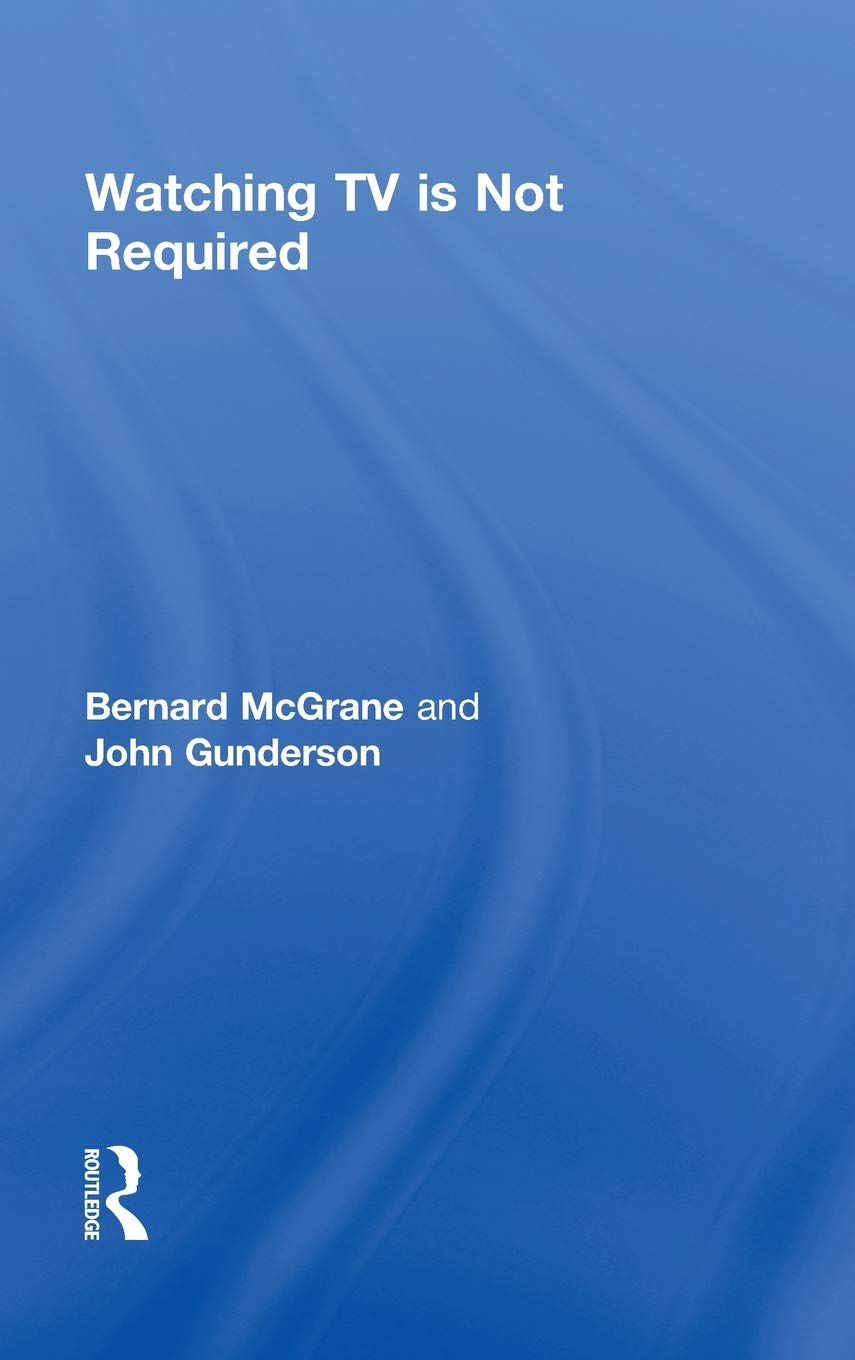
| Title | Watching TV Is Not Required: Thinking About Media and Thinking About Thinking |
| Authors | Bernard McGrane and John Gunderson |
| Primary focus | Using television to teach sociology and critical thinking |
| Intended audience | Undergraduate students and classroom instructors |
| Approach | Pedagogical, social construction of reality examples |
| Use case | Supplemental text for introductory sociology or media studies |
Our Verdict
Watching TV Is Not Required is a smart, classroom-ready resource that leverages students' everyday media habits to teach sociological thinking. Instructors who want an accessible supplemental text on the social construction of reality will find it good value for discussion-based courses; those needing exhaustive media scholarship should supplement it with broader texts.
Frequently Asked Questions
Is this book suitable for first-year students?
Yes. The writing and examples are aimed at undergraduates and work well for introductory courses.
Can this serve as a primary textbook for media studies?
No. It is best used as a supplemental, classroom-oriented reader focused on teaching thinking through TV examples.
Who are the authors?
The book is authored by Bernard McGrane with John Gunderson, drawing on McGrane's teaching experience and prior pedagogical work.
Editor's Take
Watching TV Is Not Required is a classroom-ready supplemental text that uses television examples to teach the social construction of reality; it is best for instructors and undergraduates seeking accessible discussion material rather than exhaustive media theory.

Recently viewed
Recently viewed products will appear here as customers browse the store.