

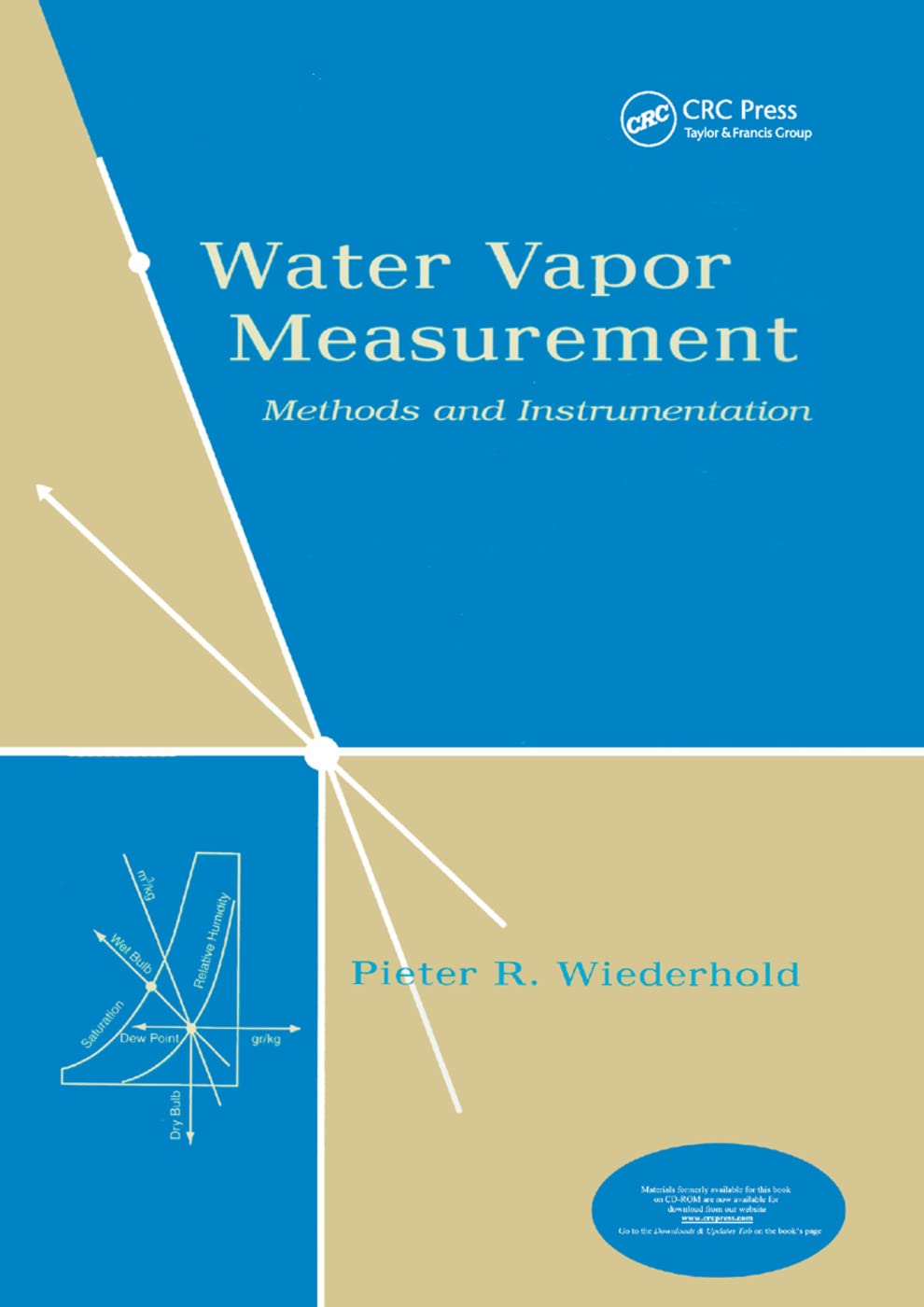
Water Vapor Measurement: Methods and Instrumentation - Practical
Water Vapor Measurement: Methods and Instrumentation - Practical
Price subject to change. Tap below for current.
Couldn't load pickup availability
In this review of Water Vapor Measurement: Methods and Instrumentation, the book is presented as a focused technical reference for engineers and technicians who need reliable guidance on humidity measurement. The single biggest reason to buy is its practical combination of fundamentals and applied guidance: it covers basic theory, common applications, and clear installation, maintenance and calibration recommendations so a practitioner can move from concept to instrument setup with fewer mistakes.
Key Features
- Comprehensive coverage: Explains the rudiments and theory of humidity so readers gain a solid conceptual foundation before using sensors.
- Practical applications: Describes common applications and the advantages and limitations of frequently-used sensors to help choose the right method for a job.
- Installation guidance: Offers clear guidelines for installation that reduce field errors and improve measurement reliability.
- Maintenance and calibration: Provides straightforward procedures for maintenance and calibration so instruments remain accurate over time.
- Handy conversion disk: Includes a disk intended for easy conversions of humidity parameters and units to simplify on-the-spot calculations.
Who It's For
This book is best for electrical and instrumentation engineers, laboratory technicians, and systems integrators who work with environmental sensors and need a practical reference on humidity measurement and instrumentation. The emphasis on both theory and real-world guidance makes it useful as a desk reference during sensor selection, installation and troubleshooting.
It is less suitable for casual readers or those seeking a general atmospheric science textbook, because the focus is on measurement methods, instruments and applied procedures rather than broad climate theory or elementary science for nontechnical audiences.
Pros & Cons
Pros
- Combines theory and practice so readers can understand why a method works and how to implement it.
- Practical installation, maintenance and calibration advice reduces common field errors.
- The included conversion disk speeds unit conversions and parameter checks in the field.
Cons
- Material is focused and technical, so novices without an engineering background may find it terse.
Specifications
| Title | Water Vapor Measurement: Methods and Instrumentation |
| Author | Pieter R. Wiederhold |
| Focus | Humidity measurement theory and instrumentation |
| Includes | Guidelines for installation, maintenance and calibration |
| Supplement | Conversion disk for humidity parameters and units |
| Intended audience | Engineers, technicians, instrument users |
Our Verdict
Water Vapor Measurement is a concise, no-nonsense technical reference that bridges foundational theory and hands-on instrumentation practice. It is a good value for professionals who install or maintain humidity sensors and need reliable setup and calibration guidance, and the conversion disk is a practical bonus for field work.
Frequently Asked Questions
Does this book explain sensor differences?
Yes. It covers advantages and limitations of frequently-used sensors so readers can compare options.
Is the conversion disk useful in the field?
The disk is intended for easy conversions of humidity parameters and units and can simplify calculations during installations.
Who will benefit most from this book?
Engineers and technicians working with humidity measurement and instrumentation will get the most practical value.
Editor's Take
A concise technical reference that bridges theory and hands-on instrumentation practice, ideal for engineers and technicians who install, maintain and calibrate humidity sensors.

Recently viewed
Recently viewed products will appear here as customers browse the store.