

When is Separate Unequal? A Disability Perspective - Legal Analysis
When is Separate Unequal? A Disability Perspective - Legal Analysis
Price subject to change. Tap below for current.
Couldn't load pickup availability
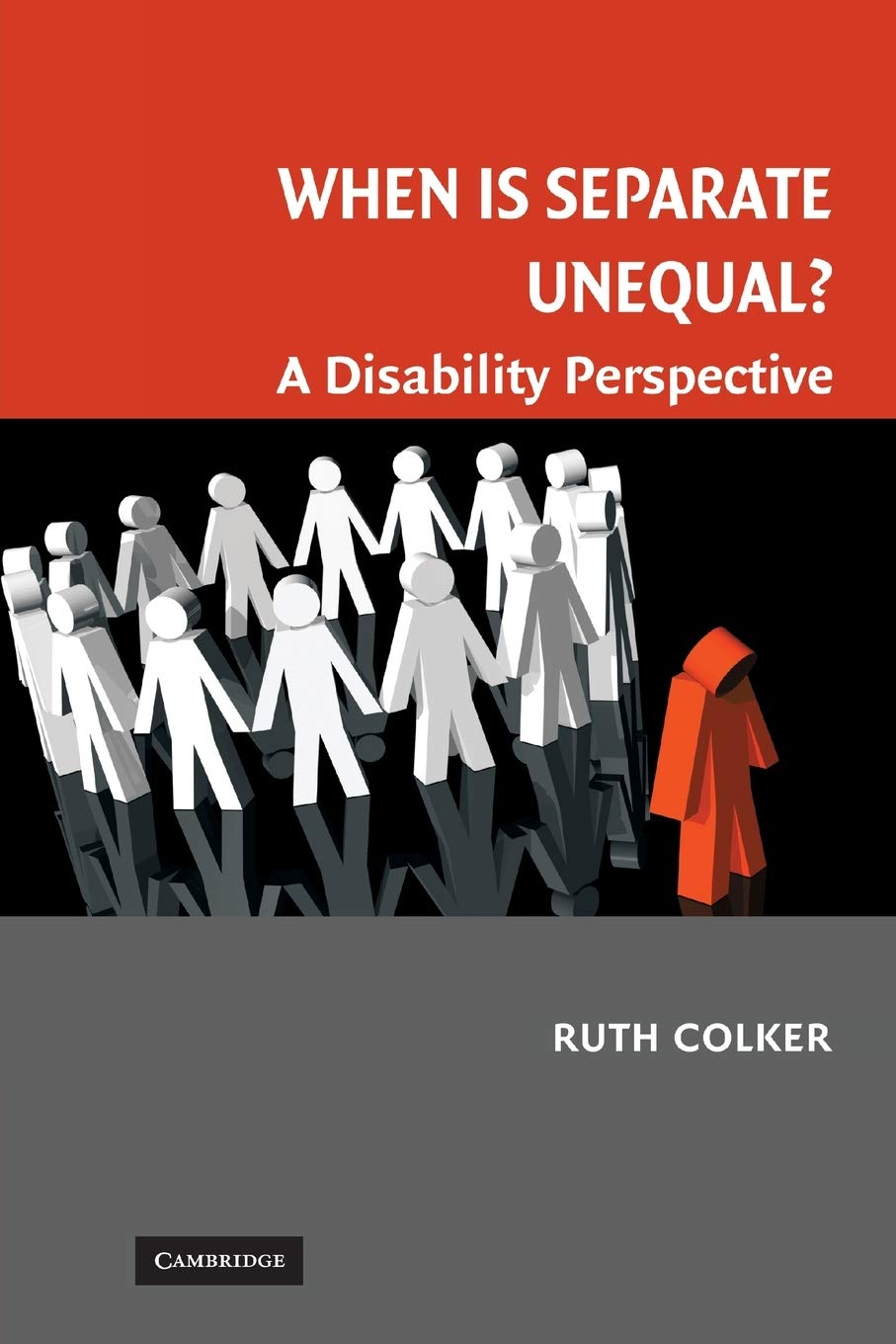
In this review of When is Separate Unequal?: A Disability Perspective, the reviewer finds a carefully argued legal framework aimed at scholars, advocates, and policy makers who want to reframe equality for people with disabilities. Professor Colker does not assume separate programs are always inferior; instead she presents an anti-subordination perspective that helps readers weigh when disability-specific programs advance substantive equality and when integration is preferable. The book's clearest selling point is its practical focus across real policy areas, making it useful to anyone working on disability law or education policy.
Key Features
- Anti-subordination framework: Offers a clear analytical lens for courts and lawmakers to decide whether separate or integrated approaches will produce substantive equality for individuals with disabilities.
- Practical focus: Applies theory to concrete fields such as K-12 and higher education, employment, voting, and health care to show how doctrine affects real people.
- Nuanced stance: Balances tolerance for disability-specific programs in some contexts with advocacy for integration in others, helping readers avoid one-size-fits-all solutions.
- Comparative application: Extends the disability perspective into racial policy debates, illustrating how criteria can be used to advance integration.
- Accessible scholarship: Structures argumentation so that legal scholars, advocates, and policy students can follow both theory and practice.
Who It's For
The book is best for legal scholars, disability rights advocates, policy makers, and graduate students who need a rigorous but pragmatic approach to equality doctrine. Those drafting litigation strategies or advising school districts will find the policy examples particularly useful.
Readers seeking a general interest or purely autobiographical account of disability will want a different title; this is focused on legal analysis and policy applications rather than personal narratives or introductory overviews for nonlegal audiences.
Pros & Cons
Pros
- Provides a thoughtful anti-subordination framework that clarifies when separate programs may be appropriate.
- Uses concrete domains like K-12, higher education, and voting to illustrate doctrine in practice.
- Bridges disability and race policy discussions, offering comparative insight for broader equity work.
Cons
- The book is legal and policy focused, which may feel dense for readers wanting lighter or anecdotal treatments.
Specifications
| Title | When is Separate Unequal?: A Disability Perspective |
| Series | Cambridge Disability Law and Policy Series |
| Author | Ruth Colker |
| Primary focus | Anti-subordination legal framework for disability equality |
| Topics covered | K-12 education, higher education, employment, voting, health care |
| Comparative application | Applies disability perspective to racial policy questions |
Our Verdict
When is Separate Unequal? is a strong, well-reasoned contribution for readers who need a policy-oriented legal analysis of disability equality. Its practical examples and nuanced stance on separate versus integrated programs make it good value for advocates and scholars seeking to craft informed strategies rather than simplistic answers.
Frequently Asked Questions
Does the book argue that separate programs are always wrong?
Answer. No, the author rejects that premise and uses an anti-subordination approach to assess when disability-specific programs may be appropriate.
Which policy areas does the book address?
Answer. It covers K-12 and higher education, employment, voting, and the provision of health care, applying the framework to each.
Is this book suitable for nonlaw readers?
Answer. It is written as legal and policy analysis, so readers without legal background may find it more demanding than a general overview.
Editor's Take
A rigorous, policy-focused legal analysis that helps advocates and scholars determine when disability-specific programs or integration best advance substantive equality; valuable for law and policy work.

Recently viewed
Recently viewed products will appear here as customers browse the store.