

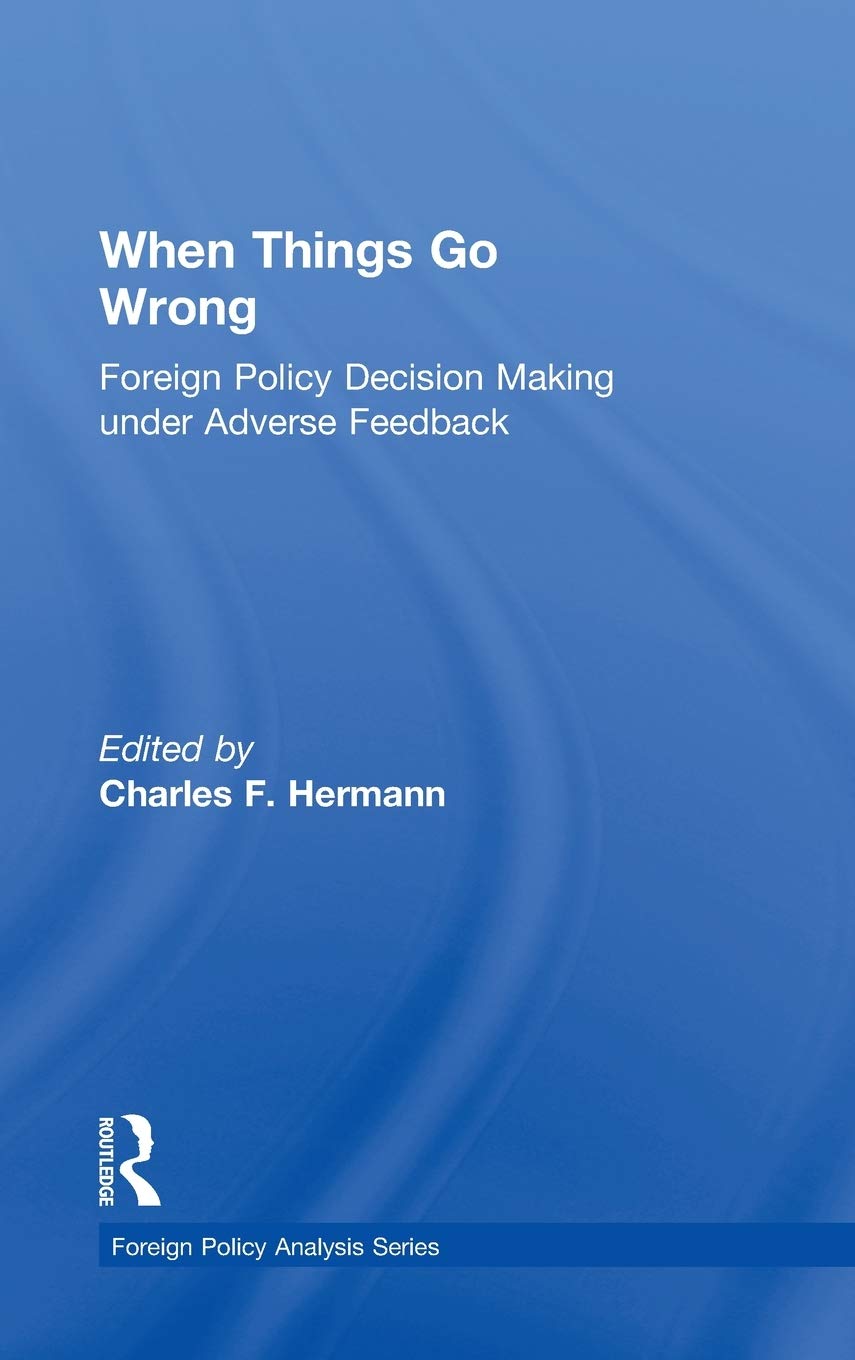
When Things Go Wrong - Foreign Policy Analysis Charles
When Things Go Wrong - Foreign Policy Analysis Charles
Price subject to change. Tap below for current.
Couldn't load pickup availability
In this review of When Things Go Wrong (Foreign Policy Analysis) the book is presented as a focused, academic examination of how governments respond when major foreign policy commitments begin to fail. The bottom line: this is best for scholars, advanced students, and policy professionals who need a systematic framework for decision making under adverse feedback. Charles F. Hermann's treatment is methodical and thoughtful, offering cross-disciplinary insights that make the book a useful reference for anyone studying or advising on high-stakes policy reversals or adaptations.
Key Features
- Central question: Explores what governments do when new information shows a major foreign policy commitment is failing, giving readers a clear analytic focus.
- Interdisciplinary approach: Brings together work from multiple fields to illuminate decision dilemmas that apply across public and private sectors.
- Practical relevance: Uses the foreign policy context to show how concepts of feedback and adjustment matter in urgent, life-and-death situations.
- Theoretical depth: Offers frameworks that help readers recognize when to persist, revise, or withdraw from a failing policy commitment.
- Case-oriented insight: Discusses scenarios and decision trade-offs that readers can apply to contemporary international relations problems.
Who It's For
When Things Go Wrong is aimed at readers with a background in political science, international relations, public policy, or those working in government and think tanks who require a rigorous analysis of policy failure and adaptation. The book is particularly useful as a reference text for graduate seminars and policy workshops where understanding the mechanics of reversal and persistence matters.
Readers seeking a light, popular overview of global events or a narrative history of a single crisis should look elsewhere; this is a focused analytical work rather than general journalism or memoir. Undergraduate introductions with no prior exposure to policy theory may find parts of the book demanding without supplementary coursework.
Pros & Cons
Pros
- Clear framing of the central decision dilemma helps readers apply the material to real-world cases.
- Cross-disciplinary synthesis provides broader perspectives than a single-field treatment would offer.
- Practical emphasis means the book is useful to policy advisers and advanced students alike.
Cons
- The book's analytical style can feel dense for readers seeking a narrative or introductory text.
Specifications
| Title | When Things Go Wrong (Foreign Policy Analysis) |
| Author | Charles F. Hermann |
| Subject area | Foreign policy analysis / international relations |
| Approach | Interdisciplinary, decision-focused |
| Audience | Scholars, policy professionals, advanced students |
Our Verdict
If you need a rigorous, decision-oriented study of how governments respond when major foreign policy commitments falter, this book is a strong value. Charles F. Hermann supplies a disciplined framework and cross-field insights that make the work a lasting reference for policy analysts and graduate students who must evaluate whether to persist with, alter, or abandon high-stakes commitments.
Frequently Asked Questions
Is this book suitable for policy practitioners?
Yes. The emphasis on decision dilemmas and real-world applicability makes it useful for advisers and officials facing commitment problems.
Does the book include case studies or examples?
The book applies interdisciplinary insights to challenging foreign policy circumstances, using scenarios to illustrate decision trade-offs rather than providing narrative history.
Is prior academic training required to get the most from it?
A grounded understanding of political science or public policy helps, as the treatment is analytical and aimed at advanced readers.
Editor's Take
When Things Go Wrong is a rigorous, decision-focused study ideal for scholars and policy professionals; Charles F. Hermann provides a disciplined framework and interdisciplinary insights useful for evaluating whether to persist with or abandon failing commitments.

Recently viewed
Recently viewed products will appear here as customers browse the store.