

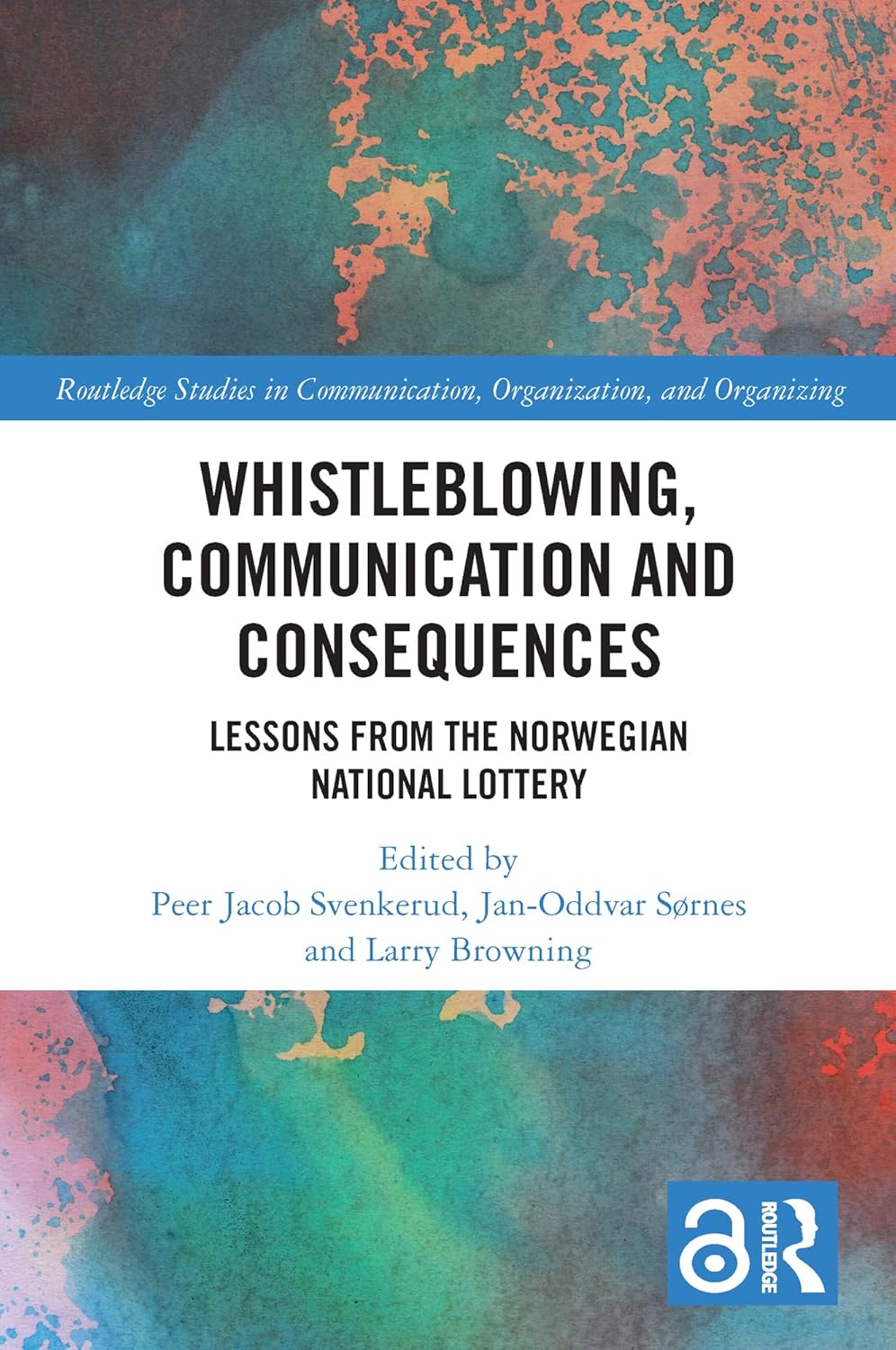
Whistleblowing, Communication and Consequences - In-depth Case Study
Whistleblowing, Communication and Consequences - In-depth Case Study
Price subject to change. Tap below for current.
Couldn't load pickup availability
In this review of Whistleblowing, Communication and Consequences the bottom line is simple: this book is for readers who want a rigorous, multi-perspective examination of a single high-profile whistleblowing case. The authors and contributors turn the Norsk Tipping episode into a sustained study of organizational wrongdoing, public communication and moral complexity, making it a strong pick for scholars, practitioners and graduate students. Its most compelling attribute is the combination of an ethnographic account from the whistleblower himself with fourteen theoretical lenses that illuminate different facets of whistleblowing.
Key Features
- First-hand account: Includes an ethnographic chapter by the whistleblower that offers a rare insider perspective on motive and experience, which deepens understanding of real-world disclosure.
- Multi-theoretical approach: Fourteen different theoretical lenses are applied, enabling readers to compare frameworks and broaden their analytical toolkit for studying organizational wrongdoing.
- Focused case study: Centers on the Norsk Tipping affair, providing a detailed, cohesive narrative that traces communication and consequence across a national scandal.
- Interdisciplinary contributors: Contributions from scholars and practitioners present varied viewpoints that enrich discussion for both academic and applied audiences.
- Conceptual analysis: Moves beyond storytelling to examine literature and conceptual topics related to whistleblowing, making it useful for course reading and research reference.
Who It's For
This volume is best suited for researchers, graduate students and professionals in communication, organizational studies, ethics and compliance who appreciate in-depth case analysis and theoretical breadth. The detailed study of Norsk Tipping will appeal to those studying public-sector institutions and national-level controversies.
Readers seeking practical step-by-step guidance for whistleblower programs or a short overview of whistleblowing trends should look elsewhere, as this book emphasizes conceptual analysis and scholarly perspectives over hands-on policy templates.
Pros & Cons
Pros
- Rich, insider ethnographic material offers authenticity and emotional immediacy to the case study.
- Wide range of theoretical lenses provides comparative value for researchers developing or testing hypotheses.
- Contributors from multiple backgrounds deliver interdisciplinary insight useful for teaching and scholarship.
Cons
- The book is academic in tone and may not satisfy readers seeking concise practical advice or stepwise compliance tools.
Specifications
| Title | Whistleblowing, Communication and Consequences |
| Series | Routledge Studies in Communication, Organization, and Organizing |
| Authors / Editors | Jan-Oddvar Srnes, Peer Jacob Svenkerud, Larry Browning |
| Case Focus | Norsk Tipping (Norwegian national lottery) |
| Approach | Ethnography and fourteen theoretical lenses |
| Audience | Scholars, graduate students, communication and organization researchers |
Our Verdict
Whistleblowing, Communication and Consequences is a valuable, well-structured contribution for anyone researching whistleblowing or organizational wrongdoing. Its combination of a whistleblower ethnography and multi-theoretical analysis makes it good value for academics and advanced students who need a deep case study and conceptual framing rather than a practical handbook.
Frequently Asked Questions
Does this book include a firsthand account?
Yes, the book opens with an ethnographic account by the whistleblower involved in the Norsk Tipping affair.
Is this suitable for practitioners?
Practitioners will find theoretical insight and case lessons useful, but those seeking operational whistleblower program templates may need additional practical guides.
How broad is the analysis?
The volume uses fourteen different theoretical lenses and contributions from an international team of scholars to present a multi-faceted analysis.
Editor's Take
A rigorous, multi-perspective study that combines a whistleblower's ethnography with fourteen theoretical lenses, making it ideal for scholars and graduate students seeking deep analysis rather than practical templates.

Recently viewed
Recently viewed products will appear here as customers browse the store.