

William and Lawrence Bragg, Father and Son: Extraordinary Scientific
William and Lawrence Bragg, Father and Son: Extraordinary Scientific
Price subject to change. Tap below for current.
Couldn't load pickup availability
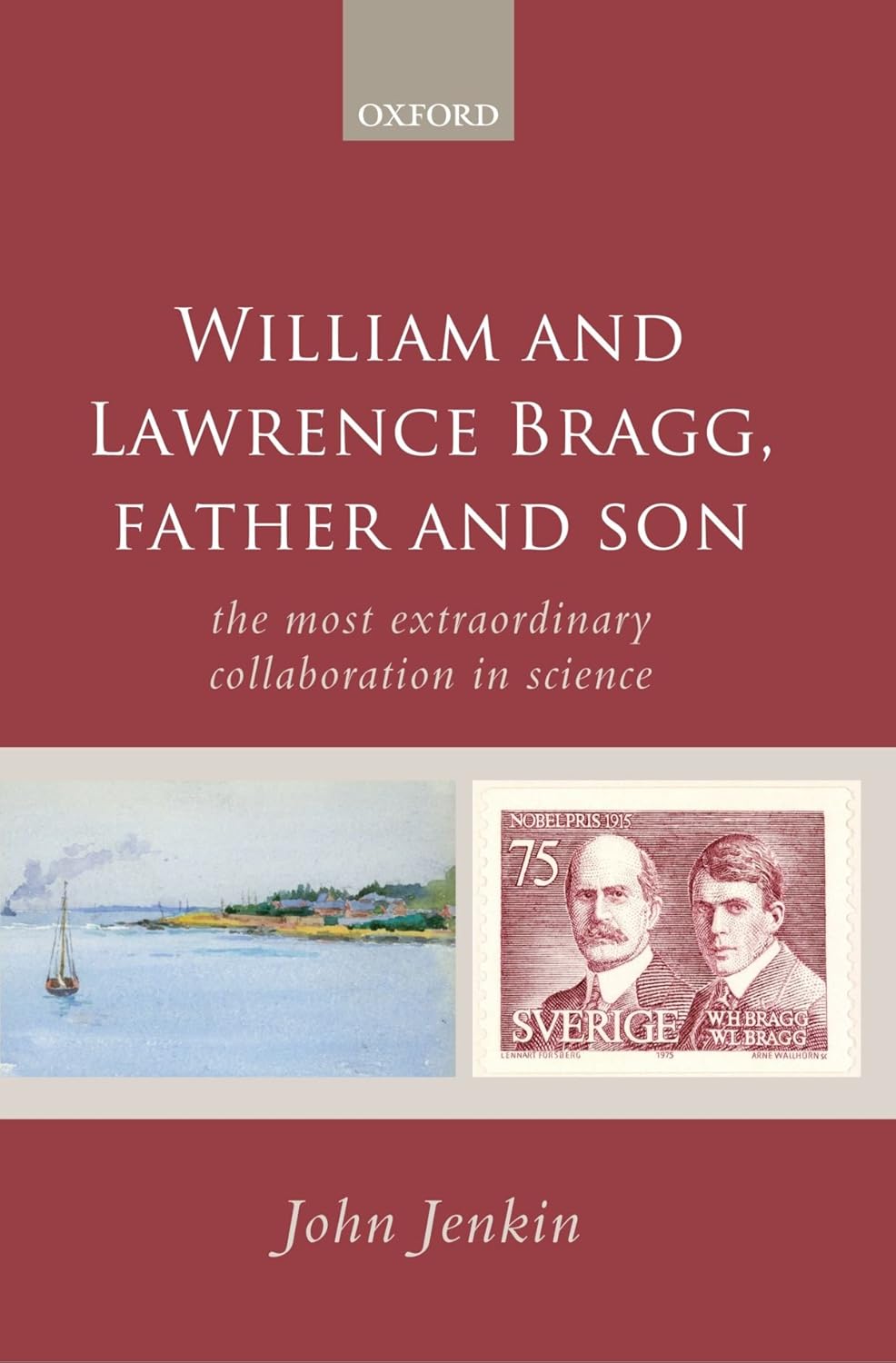
In this review of William and Lawrence Bragg, Father and Son, John Jenkin offers a compact, well-focused examination of a father-son partnership that reshaped modern science. The bottom line: this book is for readers who want a narrative account of scientific discovery and the human story behind it; its single biggest reason to buy is the clear tracing of how Lawrence's 1912 explanation of X-ray interaction with crystals, combined with William's guidance, created the foundations of X-ray crystallography and transformed multiple scientific fields.
Key Features
- Historical narrative: The book chronicles how a modest father and son rose from obscurity to international prominence, making the scientific developments accessible to non-specialists.
- Scientific focus: It explains the 1912 insight into the interaction of X-rays with crystals and shows why that work launched modern X-ray spectroscopy and crystallography.
- Interdisciplinary impact: The review emphasizes how their discoveries influenced physics, chemistry, geology, materials science, electronics, and later biology and medical science.
- Biographical detail: Attention is paid to both men's roles during the First World War and to William's early advocacy for the dual wave and particle nature of radiation.
- Concise scope: The book keeps to the key decades when the Braggs led crystallography internationally for roughly fifty years, giving a focused rather than encyclopedic account.
Who It's For
This volume is best suited to readers interested in the history of science, academic biographies, and the human stories behind technical breakthroughs; graduate students, historians, and scientifically curious general readers will find the book rewarding. It assumes little prior technical knowledge while still conveying why the Braggs mattered to multiple scientific disciplines.
Those seeking a deep technical manual on crystallographic methods or a heavily illustrated textbook should look elsewhere, as the book is primarily biographical and narrative rather than a practical lab guide or richly visual reference.
Pros & Cons
Pros
- Clear explanation of the 1912 discovery and its significance for X-ray spectroscopy and crystallography.
- Good balance between personal biography and scientific context, making complex ideas approachable.
- Useful discussion of the Braggs' wider impact across many scientific fields, showing long-term relevance.
Cons
- The book is not a technical manual or detailed methodological textbook for practicing crystallographers.
Specifications
| Title | William and Lawrence Bragg, Father and Son |
| Author | John Jenkin |
| Subject | History of science; biography of scientists |
| Key discovery year | 1912 (interaction of X-rays with crystals) |
| Main topics | X-ray spectroscopy, X-ray crystallography, WWI roles |
| Scope | Biographical and historical overview covering ~50 years |
Our Verdict
John Jenkin's account is a compact, thoughtful biography that convincingly argues the Braggs' central place in modern science; it is a good value for readers who want historical perspective and human detail about scientific discovery rather than a laboratory reference.
Frequently Asked Questions
Does the book explain the science clearly?
Yes; the review notes the book makes the 1912 discovery and its significance accessible without requiring advanced technical knowledge.
Is this a technical textbook on crystallography?
No; it is a biographical and historical narrative rather than a practical methodology manual.
Does the book cover both father and son equally?
The book gives attention to both William and Lawrence, including their wartime roles and William's early views on radiation.
Editor's Take
A compact, thoughtful biography that makes the Braggs' 1912 discovery and long-term impact clear and accessible; ideal for readers seeking historical perspective rather than a technical manual.

Recently viewed
Recently viewed products will appear here as customers browse the store.