

Yahboom K210 Vision Sensor Module for UNO RaspberryPi - AI Vision
Yahboom K210 Vision Sensor Module for UNO RaspberryPi - AI Vision
Price subject to change. Tap below for current.
Couldn't load pickup availability
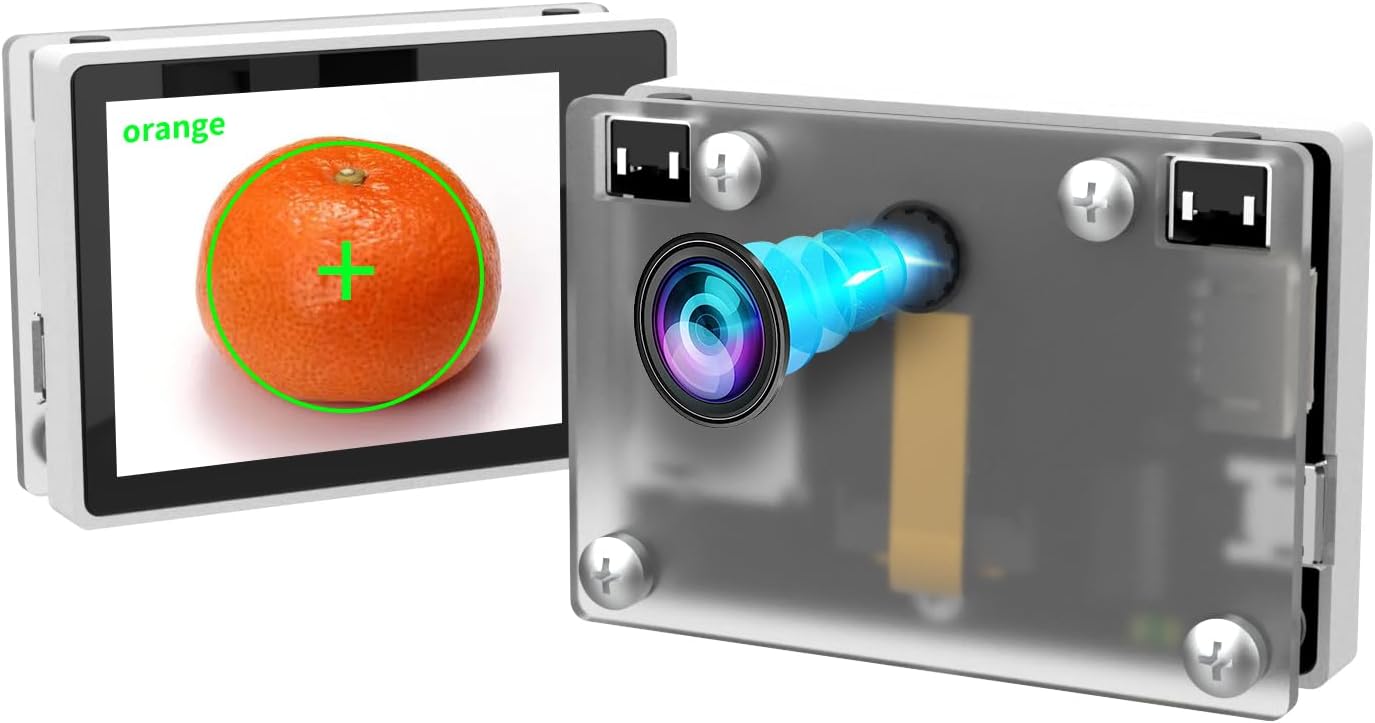
In this review of the Yahboom K210 Vision Sensor Module, readers will find a compact AI camera aimed at makers, students, and robotics hobbyists who need low-power, on-board visual processing. The module's single biggest selling point is its built-in K210 AI chip combined with a 2 million pixel OV2640 camera and a 2.0 in capacitive LCD, which together deliver fast, local image recognition without constant tethering to a PC. This review focuses on real-world usability, development workflow, and how well the module lowers the barrier to entry for simple AI vision tasks.
Key Features
- 1Tops AI compute: The integrated K210 chip provides efficient ondevice inference so common vision tasks run quickly with low power draw.
- 2 MP OV2640 camera: The camera sensor provides sufficient resolution for face, color and barcode detection in typical hobby and educational setups.
- Built-in 2.0 in LCD: The capacitive touch screen makes it easy to preview images and interact with the module without a separate display.
- MicroPython and CanMV: The MicroPython programming environment and CanMV support simplify development and let users train simple models with minimal setup.
- Serial interface compatibility: The serial port works with a wide range of controllers like Arduino, Raspberry Pi Pico and STM32, making integration straightforward.
- Open source code: The fully open source programs and tutorials let users modify recognition routines and adapt the module for custom projects.
Who It's For
The K210 vision module is ideal for students learning AI vision, hobbyists building robots, and instructors needing a compact, handson visual demo board; the simple MicroPython workflow and tutorials let beginners train small models with just a few samples. It also fits makers who want to add face, QR or line tracking to projects without writing or deploying heavy deep learning stacks on a PC.
Those who need high resolution photography, industrial grade cameras, or extensive labeled dataset training should look elsewhere, since the module targets low-power embedded recognition and educational use rather than professional machine vision installations.
Pros & Cons
Pros
- Onboard K210 AI provides fast, lowpower processing for common vision tasks without host compute.
- MicroPython and CanMV make initial development and model training accessible to beginners.
- Wide controller compatibility through a serial interface eases integration into existing projects.
- Open source code and tutorials support custom development and learning.
Cons
- The 2 MP OV2640 sensor and small screen limit use for highdetail imaging or professional inspection tasks.
- Advanced vision tasks beyond the K210s capacity will require more powerful hardware or offloading to a host.
Specifications
| AI chip | K210 1Tops class processor |
| Camera sensor | 2 million pixel OV2640 |
| Display | Built-in 2.0 in capacitive LCD |
| Programming | MicroPython with CanMV development environment |
| Interfaces | Serial interface for STM32, Arduino, Raspberry Pi Pico and others |
| Recognition modes | Face, QR/barcode, object, color, road sign and line tracking |
Our Verdict
The Yahboom K210 Vision Sensor Module is a strong value for educators, students and makers who need an easy to program, self contained AI vision board; its combination of the K210 chip, OV2640 camera and MicroPython workflow keeps experimentation simple and affordable. For anyone wanting to prototype face detection, QR scanning or line tracking on low power hardware, it is a practical, open source choice, but those needing professional image fidelity or large model capacity should consider more powerful alternatives.
Frequently Asked Questions
Can I use this module with Arduino?
Yes, the module exposes a serial interface and can send recognition results to Arduino and other microcontrollers without deep vision algorithm work.
How do I train a model?
Yahboom documentation and CanMV let users record a few example images and perform ondevice model training using MicroPython, streamlining basic model creation.
Is the software closed?
No, the program source code is open source, so users can modify and extend recognition routines for custom projects.
Editor's Take
The Yahboom K210 Vision Sensor Module is a practical, open source AI camera for students and makers who want lowpower, ondevice face, QR and line recognition with easy MicroPython development; it offers strong value for prototyping but is not suited to highresolution industrial imaging.

Recently viewed
Recently viewed products will appear here as customers browse the store.